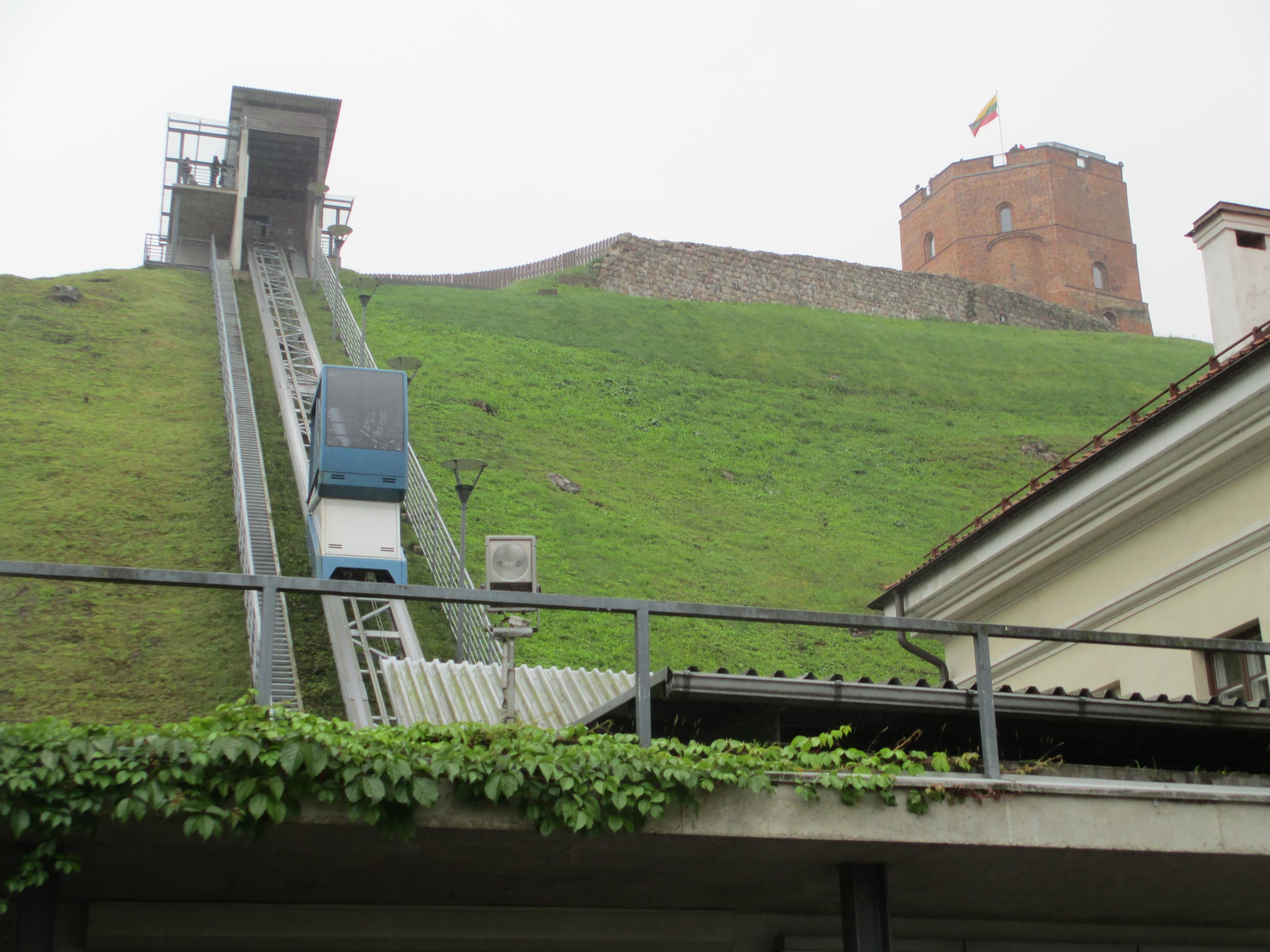
Vilnius Old Town is small enough to explore without a guide, but its story – a red-brick tower, a district that declared its own independence as a joke that stuck, five centuries of architecture layered on top of itself – rewards having someone explain it as you go.
Five centuries in one old town
Vilnius traces its founding to 1387, when Grand Duke Jogaila – also King of Poland at the time – granted it Magdeburg rights, though Gediminas, the city's legendary founder, had already made the area his capital decades earlier in the early 14th century. What followed was centuries of rebuilding rather than any single architectural plan: Gothic churches, Renaissance courtyards, and a wave of Baroque construction that eventually gave Vilnius its current claim to fame – one of the largest baroque old towns anywhere in Northern or Eastern Europe, UNESCO-listed since 1994.
A tower, a cathedral, and a "republic" next door
Gediminas Tower, a 15th-century red-brick survivor of the old Upper Castle, is the clearest single landmark – it now houses a small museum of archaeological finds and models tracing the city's changing shape. At the Old Town's heart stands Vilnius Cathedral, officially the Basilica of St. Stanislaus and St. Ladislaus, rebuilt so many times over the centuries that its current form is largely 18th-century Neoclassical. Just across the river, Užupis takes the city's layered identity somewhere stranger: an artsy district of around 7,000 people, nearly 1,000 of them artists, that declared itself the independent "Republic of Užupis" on 1 April 1998, complete with its own constitution.
Booking
A guided walking tour with snacks covers the Old Town's highlights in about 2.5 hours with a local guide, and is a well-reviewed, frequently sold-out option worth booking a day or two ahead. Want the city's 20th-century history alongside its medieval one? A Soviet Vilnius walking tour covers a completely different, more recent chapter.
Good to know
Frequently asked questions
Listed in 1994, it's recognised as one of Northern and Eastern Europe's largest baroque old towns – an organic mix of Gothic, Renaissance, Baroque and Classical architecture built up over five centuries.
Image: Avi1111 (Dr. Avishai Teicher) via Wikimedia Commons (CC BY-SA 3.0)