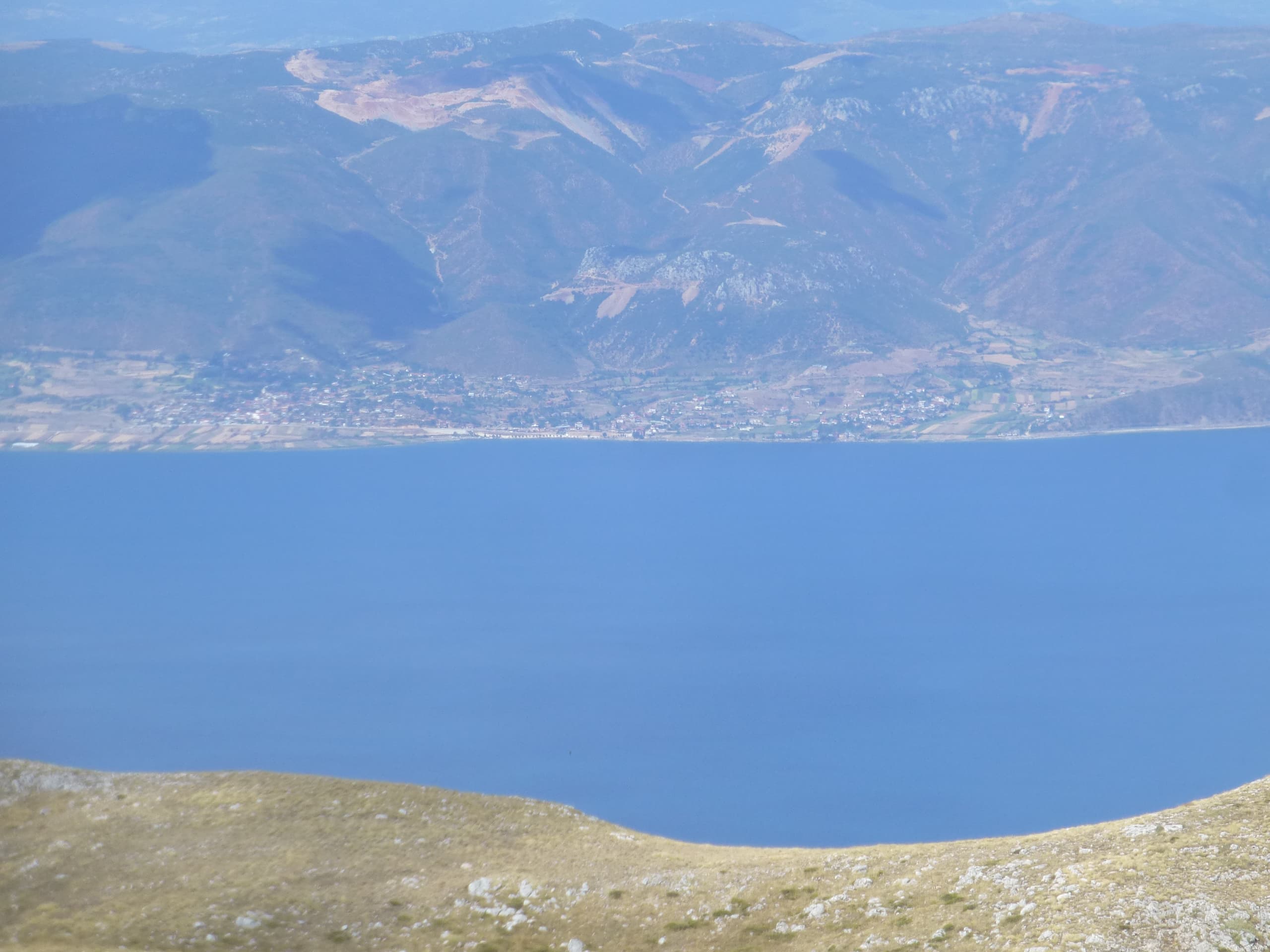
Lake Ohrid formed somewhere between 1.4 and 1.9 million years ago, and a boat tour across it is the one way to see both its landmarks and its scale at once – Europe's deepest lake, and one of the oldest anywhere in the world still sitting in its original basin.
A lake old enough to grow its own species
Most lakes fill with sediment and disappear within a few thousand years; Lake Ohrid has survived over a million times that long because the land beneath it keeps sinking, a slow tectonic process that stops sediment from ever building up enough to choke the basin. At a maximum depth of 288 metres it's the deepest lake in the Balkans, and its age has given roughly 200 species the time to evolve here and nowhere else – distinct snails, ducks, and the Ohrid trout among them, a level of endemic biodiversity that's earned the lake comparisons to the Galápagos. The lake and Ohrid's Old Town together form a single combined UNESCO World Heritage Site, recognised for both natural and cultural value; the Albanian side of the shoreline picked up its own separate UNESCO natural listing in 2019.
Seeing the landmarks from the water
A boat tour's main appeal is the different angle it gives on sights normally seen from land: the Church of St. John at Kaneo perched on its cliff is usually photographed from the shore path beside it, but from the water you see the full drop from church to waterline and the mountains behind it in one frame. The same applies to Samuel's Fortress and the Old Town's rooftops, visible as a single skyline from out on the lake rather than piece by piece on foot. Many tours build in a stop for swimming near Kaneo Beach or one of the smaller bays further along the shore, since the lake's low-nutrient water is unusually clear even close to town.
Booking
Most Lake Ohrid boat tours run 1-2 hours from the town harbour, with both shared and private options available; sunset departures are popular for the light on the water and the Old Town skyline behind. It pairs well with a half-day trip further down the shore to St. Naum Monastery, which sits directly on the lake at its southern tip.
Good to know
Frequently asked questions
Between 1.4 and 1.9 million years, making it one of the oldest lakes in the world still in its original basin – most lakes fill with sediment and vanish within a few thousand years, but ongoing tectonic sinking beneath Ohrid has kept it open for over a million times that long.
Image: Vmenkov via Wikimedia Commons (CC BY-SA 4.0)